Thursday, March 29, 2012

Constitutionality of the Affordable Care Act


One of the hottest topics on the news docket today is a monumental Supreme Court case that could essentially define the first term of our president.  The Supreme Court will spend 3 days discussing the constitutional legality of Obama’s signature Affordable Care Act.  In essence, the act requires virtually every American citizen to receive health insurance, whether through Medicare, Medicaid, employer provided options, or from a private insurance company.  If an American fails to agree with this mandate, he or she will be forced to pay a steep annual penalty.  The Supreme Court hearings come after years of the act undergoing deep scrutiny and revisions by Congress.

The crux of the bill, the individual mandate, is what has put our nation’s opposing parties in arms.  Former Solicitor General Paul Clements from Florida is representing the 26 states that are suing the national government on the notion that Obamacare is in direct violation of the constitution.  “The mandate represents an unprecedented effort by Congress to compel individuals to enter commerce...,” stated Clements in his opening arguments to the Supreme Court’s 7 Justices on March 27th.  Clements goes on to observe that the Commerce Clause of the U.S. Constitution limits the federal government to regulating commerce, and does not allow it to enforce commerce.  Opponents of the act claim that Obamacare breaches the constitutional limits set in place by our current system of government by forcing individuals to purchase something against their own free will.  The court case of United States v. Lopez is usually cited, with opponents pointing out that the Gun-Free School Zones Act of 1990 was ruled unconstitutional as the Supreme Court determined that the Commerce Clause prohibited the U.S. government in interfering with activity (in this case gun possession) that is not directly related to economic activity.  Furthermore, it is argued that if the regulation of health care is ruled constitutional, then where exactly does the buck stop in terms of the government’s economic power?  In the case of Wickard v. Filburn of 1942, the U.S. Government forced a farmer (Filburn) to cease growing his own wheat crop and purchase instead from the open market in order to help boost his local economy during the Great Depression.  ‘How far,’ ask stringent opponents of the ACA, ‘is too far?’    

In response to the alleged breaches of constitutionality made by the opposition, defenders of the ACA argue that because the health care industry comprises such a large fraction of our national economy, the U.S. Government is not overstepping boundaries in regulating it.  In reference to the Lopez case, the government was not able to regulate gun control since it is not directly related to economic activity, whereas the service of healthcare is coming from and going back to the pockets of American citizens, making it one of the most dynamic of economic activities.  Supporters explain that healthcare makes up nearly 1/6 of our national GDP and therefore should be and can be regulated under the federal government as interstate commerce.  Furthermore, it is pointed it out that healthcare is a service that cannot necessarily be considered an option. Unlike choosing to purchase a car or a house, we are bound to need a form of payment for our healthcare when we inevitably get sick.  In that sense, the act is not ‘forcing’ anyone to purchase something, but instead providing a service that will most surely be used at some point in their lifetime.  When individuals with no health insurance get sick today and hospitals are obliged to treat them, an insurance paying citizen’s premium rises roughly $1000 for the year.  A system with universal health care provides a safety net for those people unable to afford health care on their own.  Proponents of the bill go on toexplain that Obamacare will eliminate the exclusion of health care to individuals with ‘pre-existing conditions.’  Currently, private insurers prevent a large number of individuals from receiving health insurance benefits on the basis of pre-existing conditions that may cost insurance companies more money on that patient in the long run.  Defenders of Obamacare claim that the ACA keeps the U.S. Government within the bounds of the constitution by regulating an obvious economic activity.  

One thing is clear: both parties of our government agree that our current healthcare system is fundamentally broken and in need of desperate change.  However, it is the question of the legality and monetary consequences of the Affordable Care Act that has seen itself on the court’s floor.  As usual, we leave the question up to you: Does President Obama’s Affordable Care Act overstep the constitutional limitations of the federal government?


Does President Obama’s Affordable Care Act overstep the constitutional limitations of the federal government?

Wednesday, February 22, 2012

Hot Topic: Iran's Nuclear Program


The current commotion regarding Iran revolves around development of nuclear technology. Iran claims that they are developing nuclear capability for use as an alternative, clean, efficient energy source. Many countries, including the United States, Israel, and countries in the European Union consider Iran’s nuclear program a major threat. They believe Iran is secretly developing a nuclear weapons program.

Iran signed the Nuclear Non-Proliferation Treaty (NPT) but violated its safeguards agreement by developing a uranium-enrichment program. The International Atomic Energy Agency (IAEA), after inspection, has released evidence that they consider credible that suggests Iran has carried out activities related to the development of a nuclear device.

The United States and the European Union have imposed economic sanctions against Iran in order to cut them off from the international financial system and pressure Tehran to end their nuclear program. In response, Iran has threatened to close the Strait of Hormuz, and also to cut off sales of Iranian oil to at least six nations of the EU.


So, the controversial question follows: Does Iran have the right to develop a nuclear program for peaceful intentions (i.e. energy)? Vote below!


Does Iran have the right to develop a nuclear program for peaceful intentions (i.e. energy)?


Thursday, February 2, 2012

The Long Awaited Facebook IPO: Boom or Bust?


Yesterday (2/1/2012), Facebook filed their S-1 with the Securities and Exchange Commission (SEC) to begin the paperwork for their Initial Public Offering (IPO). They are looking to raise $5 billion with their IPO, with a total company valuation upwards of $100 billion. The social media giant's IPO has been the most widely anticipated and is the latest in a string of tech IPOs that came out starting in 2011. This string includes Groupon, LinkedIn, and Zynga, all of which were considered "failures" on the Street.

In 2011, Facebook earned $1 billion in profit on $3.7 billion on revenue. 84% of their revenue came from advertising. Following Eric Schmidt (Google), Larry Page (Google), Larry Ellison (Oracle), Meg Whitman (HP), and Steve Jobs (Apple), CEO Mark Zuckerberg will be taking the traditional Silicon Valley salary cut in 2013; his salary will be $1 annually.

Given the hype around Facebook, the company's revenue potential, and the anticipation of its IPO, will Facebook perform well on the stock exchange? Or will it's fate be of the likes of LinkedIn or Zynga or Groupon? Cast your vote now!


Will Facebook's IPO be a boom or a bust?


Friday, January 27, 2012

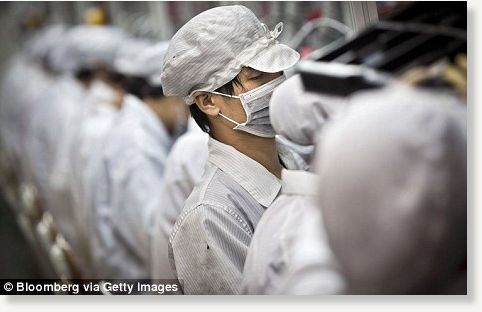
Apple, China, Human Rights

Human rights issues have been tied to labor for generations. In many countries, the balance of power between corporations and organized labor has had implications in history. China, with its continued growth and industrialization since the 1990s as a country with low-cost, highly capable manufacturing, has one of the largest labor markets in the world. With that said, the manufacturing industry has grown faster than the human rights considerations tied to such a labor force.

American corporations have invested billions of dollars into Chinese manufacturing to produce their products at lower cost and high throughput. This trend is very apparent in the technology sector, with big players such as Intel, IBM, Sony, Motorola, Lenovo, etc. having their products mass-produced in Chinese factories.


One such company, Apple, Inc. has come under the spotlight in this New York Times article: http://www.nytimes.com/2012/01/26/business/ieconomy-apples-ipad-and-the-human-costs-for-workers-in-china.html?src=me&ref=general

With ever-growing demand for iPads, iPhones, etc. Apple is in a position where they dictate costs paid to their suppliers, demand high volume in return, and oversee human rights violations in their supply chain with the supposed intent of eliminating these issues from their entire supply chain. The NYT article highlights the steps that Apple has taken to address human rights at manufacturing facilities in China, but the piece also questions whether the technology giant adheres to what they say on paper.

But whose responsiblity is it to ensure that human rights violations are eradicated from Chinese manufacturing facilities? Chinese corporations? American corporations with FDI in China? The Chinese labor force? The Chinese Government? The American Government? Depending on who you talk to, you might be surprised at the answers you get.

So my question to you is simple: Should Apple be held responsible and accountable for human rights violations in their supply chain? Please comment, discuss, and cast your votes below!


Should Apple be held responsible and accountable for human rights violations in their supply chain?

Saturday, January 21, 2012

THE 2012 REPUBLICAN PRESIDENTIAL PRIMARIES


The 2012 Republican Presidential Primaries have yielded some interesting results thus far. Out of the three primary votes, three different winners have arisen. This post gives a brief background on the winner of each primary to this point.


THE CANDIDATES

About Newt Gingrich

Newt Gingrich was the 58th Speaker of the U.S. House of Representatives. He co-founded the Congressional Military Reform Caucus and the Congressional Aviation and Space Caucus in 1981. He founded the Conservative Opportunity Society, and he also endorsed a bill to make Dr. Martin Luther King, Jr.’s birthday a national holiday. Mr. Gingrich was a pioneer of the Contract with America, under which he was instrumental in passing Welfare Reform, balancing the federal budget, and cutting capital gains tax under the Clinton Administration. He formed the Center for Health Transformation in 2003 as an effort to transform healthcare in the 21st century. Mr. Gingrich has been married three times. He earned his BA from Emory University and his MA and PhD from Tulane University.

About Mitt Romney

The former CEO of Bain & Company and founder of Bain Capital, Mr. Romney has decades of experience in the private sector. As the Governor of Massachusetts, he managed to bring the state out of debt without raising taxes, pioneer a health care program that was modeled by the Obama Administration, and spark job creation. He also had a major hand in saving the 2002 Winter Olympics from collapse. He has five sons and sixteen grandchildren, and he has supported his wife in her fights against multiple sclerosis and breast cancer. Mr. Romney earned his BA from Brigham Young University and his MBA and JD from Harvard University.

About Rick Santorum

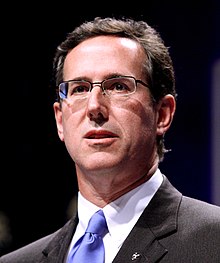
Rick Santorum is a former U.S. Senator from the State of Pennsylvania. Mr. Santorum was a member of the “Gang of Seven” that exposed the Congressional Banking and Congressional Post Office scandals, and he was an author and major player in passing the Welfare Reform Act in 1996. He served eight years on the Senate Armed Services Committee and was instrumental in passing legislation that outlawed Partial Birth Abortion. His views, including opposition to same-sex marriage, are considered socially conservative. Mr. Santorum has seven children with his wife, Karen, and is the author of the New York Times Bestseller It Takes a Family. He earned his BA and JD from Pennsylvania State University and his MBA from University of Pittsburgh.


THE PRIMARY RESULTS

Iowa – 1/3/2012

The initial count of votes suggested that Mr. Romney had won Iowa by 8 votes (30,015 for Mr. Romney vs. 30,007 for Mr. Santorum). Following a recount, Mr. Santorum was declared the true winner of Iowa, securing 29,839 votes. Mr. Romney fell into second place with 29,805 votes; only 34 less than Mr. Santorum. Mr. Gingrich was in fourth place with 13.3% of the vote.

New Hampshire – 1/10/2012

Mr. Romney won in New Hampshire with 39.4% of the vote. Newt Gingrich placed 4th with 9.4% of the vote, and Rick Santorum placed 5th with 9.3% of the vote.

South Carolina – 1/21/2012

Mr. Gingrich won in South Carolina with 40% of the vote, followed by Mitt Romney, who received 27% of the vote. Mr. Santorum placed 3rd with 17% of the vote.

Ron Paul has not won any of the primaries so far, but he has been a contender and is not ruling himself out just yet. 

So the question becomes, who would you vote for to be the Republican Nominee in the 2012 U.S. Presidential Election? Cast your vote below!


Who do you want as the Republican Nominee in the 2012 U.S. Presidential Election?

2011 AFC Championship Game: BAL @ NE

Baltimore Ravens @ New England Patriots
Sunday, 1/22/2012, 3pm ET on CBS


The classic situation of an unstoppable force meeting an immovable object:

New England Patriots Offense*
Ranked 3rd in NFL in Points per Game (32.1 PPG during Regular Season)
Ranked 2nd in NFL in Total Offense (428 YPG during Regular Season)
Ranked 2nd in Postseason in Total Offense (509 YPG)
Tom Brady: 2nd in NFL in Passing Yards (5,235 YDS during Regular Season)
Wes Welker: 2nd in NFL in Receiving Yards (1,569 YDS during Regular Season)

Baltimore Ravens Defense*
Ranked 3rd in NFL in Points Allowed (16.6 PPG during Regular Season)
Ranked 3rd in NFL in Total Defense (288.9 YPG during Regular Season)
Ranked 2nd in NFL in Rushing Defense (92.6 YPG during Regular Season)
Ranked 4th in NFL in Passing Defense (196.2 YPG during Regular Season)

*Statistics from nfl.com

These two teams did not meet during the 2011 Regular Season. The Ravens, coming off a 20-13 victory over the Houston Texans in the AFC Divisional Playoff, have not played an away game in the 2011 Postseason. The Patriots defeated the Denver Broncos 45-10 last week, in which Tom Brady tied an NFL Playoff record six touchdowns on 26/34 passing for 363 yards (1 INT).

In this week’s line (from espn.com), the Patriots are favored over the Ravens (Spread 7, O/U 50).

Cast your vote below!


Who will win the 2011 AFC Championship?